
Two Decades of Progress in Thoracic Oncology
Leading thoracic oncology experts reflect on 20 years of progress in lung cancer research and treatment, highlighting key advances in precision medicine, targeted therapies, immunotherapy and radiotherapy, while exploring emerging technologies and priorities shaping the future of lung cancer care.
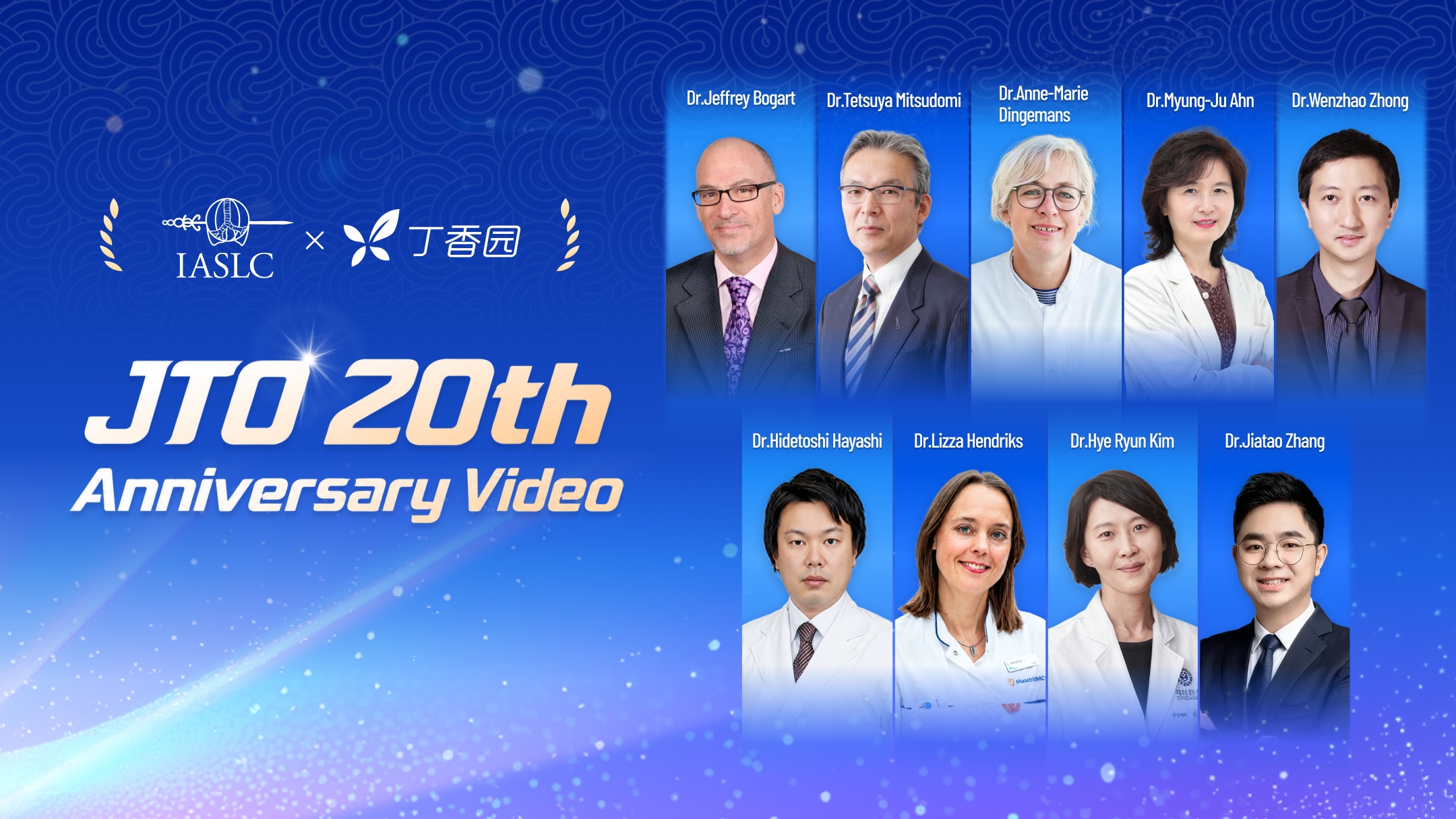
The Journal of Thoracic Oncology (JTO) was launched in 2006. Over the past two decades, the official journal of the International Association for the Study of Lung Cancer (IASLC) has documented major advances in thoracic oncology while helping translate new evidence into clinical practice. To mark its 20th anniversary, the special program "JTO at 20: Looking Back, Looking Ahead" brought together leading experts to reflect on the field's progress and consider its next priorities.
The featured experts included Dr. Jeffrey Bogart, JTO Associate Editor (the United States); Dr. Tetsuya Mitsudomi, JTO Associate Editor (Asia, Japan); Dr. Anne-Marie Dingemans, JTO Associate Editor (Europe, the Netherlands); Dr. Myung-Ju Ahn, JTO Associate Editor (Asia, Republic of Korea); and Dr. Wen-Zhao Zhong, JTO Associate Editor (Asia, China). They were joined by Dr. Hye-Ryun Kim of Yonsei Cancer Center, Dr. Hidetoshi Hayashi of Kindai University Faculty of Medicine, Dr. Lizza Hendriks of Maastricht University Medical Center, and Dr. Jia-tao Zhang of Guangdong Provincial People's Hospital. Drawing on their respective areas of expertise, the speakers reviewed 20 years of progress shared by JTO and the global thoracic oncology community.
One of JTO's defining strengths, the experts noted, is its multidisciplinary scope. The journal covers the full continuum of lung cancer care, including screening, diagnosis, imaging, pathology, surgery, radiotherapy, and systemic treatment. It also publishes important updates on TNM staging and in-depth reviews of evolving treatment concepts.
Dr. Anne-Marie Dingemans emphasized that JTO is not solely a journal for medical oncologists. It connects surgeons, radiation oncologists, pathologists, radiologists, and other specialists. Dr. Wen-Zhao Zhong also highlighted the journal's efficient and well-structured peer-review process, which has helped JTO earn the trust of researchers and attract more high-quality studies.
The past 20 years have brought profound changes to thoracic oncology. Dr. Tetsuya Mitsudomi described the discovery of EGFR mutations as a landmark turning point. Selecting patients according to molecular biomarkers opened the era of precision treatment for lung cancer. The subsequent identification of ALK and other oncogenic drivers, together with the continued development of targeted therapies, further transformed clinical practice.
Immunotherapy has created another major shift, improving outcomes for patients with advanced disease and increasingly influencing neoadjuvant and perioperative treatment. Progress in radiotherapy has also reshaped local treatment. Dr. Jeffrey Bogart reviewed advances such as image-guided radiotherapy and stereotactic body radiotherapy, along with studies that have refined clinical understanding of radiation dose, cardiac toxicity, and the effects of radiotherapy on immune cells.
The next stage of progress will focus increasingly on precision care across the entire disease course. Novel approaches involving antibody-drug conjugates, bispecific antibodies, and CAR-T cell therapy are under active investigation. Artificial intelligence may accelerate drug development and help turn previously "undruggable" targets into clinically actionable opportunities.
Emerging technologies such as online adaptive radiotherapy, MRI-guided radiotherapy, proton therapy, and heavy-ion therapy will require high-quality clinical evidence to define which patients are most likely to benefit. Meanwhile, low-dose CT screening, earlier diagnosis, recurrence-risk management, and multidisciplinary collaboration will become even more important.
JTO's 20th anniversary marks both a time for reflection and the start of a new chapter. From communicating scientific discoveries to influencing clinical practice, the journal has advanced alongside the international thoracic oncology community. With deeper global collaboration and a growing body of evidence, the coming two decades may bring earlier detection, more individualized treatment, and longer, better-quality survival for people with lung cancer.